
11 Mar CDR Testimony: Ted Yoho Testifies before the U.S. Senate Special Committee on Aging
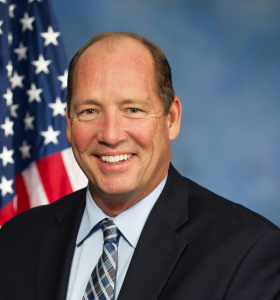
TED YOHO
Ted Yoho, a Florida Republican, served in Congress from 2013 to 2021, during which time he was chairman of the House Foreign Affairs Subcommittee on the Asia Pacific from 2017-2019. He serves as Co-Chair of the Consensus for Development Reform.
s Americans debate the rising cost of prescription drugs and the safety of global supply chains, one overlooked threat is quietly gaining ground: China is reshaping the rules of global drug regulation and using them as a tool of influence.
Thank you, Chairman Scott, and Ranking Member Gillibrand, for this opportunity to address your committee on this extremely important and timely topic. The US population especially seniors should expect the highest quality, effectiveness, and purity in the medicines they consume whether over the counter (OTC) or prescription. The pharmaceutical industry today has many manufacturers and suppliers of OTC drugs in the final dose form (FDF) consumers purchase and consume. Many of these manufacturers for both OTC and prescription drugs are in foreign countries for a variety of reasons making America dependent on another nation. The question is why?
The US Government created a situation over the past decades that drove companies offshore with high taxes, trade policies, and burdensome regulations, along with industry high labor costs. Companies sought an alternative to these factors directed by board rooms seeking higher profits. China acting astutely took advantage of a self-inflicted wound from a combination of overburdensome government policies and the drive for more corporate profits.
China enticed our manufacturers to enter the 1.4-billion-person market with the lure of cheaper taxes and labor costs, less stringent regulations, less over site in manufacturing from governing agencies, less quality control inspection, and less enforcement of bad actors. But at what cost did these companies pay seeking increased profits? More importantly what cost did the US government and we the consumers pay?
For manufacturers, the cost was high. To do business in China a company must agree to several things. A percentage of your business must be given to a Chinese state owned enterprise (SOE). There are reports of up to 51% ownership, a controlling interest in many cases. A member(s) of the Chinese Communist Party (CCP) must be on the company board to report back to Beijing. The formula for the pharmaceutical product must be revealed if not done willingly China operatives steal it. The company must submit to Chinese regulations, patent, and labor laws. Typically, China copies the product, manufactures it,and sells it at a price that is non-competitive to American manufacturer’s break-even cost thus driving them out of business. The result is China takes control of the supply side of a pharmaceutical and pricing on the world market. This scenario is well documented in Rosemary Gibson’s book, “China Rx” (2016). This is bad but not the worse.
To understand the seriousness of having a country controlling a commodity like pharmaceuticals requires knowledge of how a drug is made. The FDF of a drug is composed of key starting materials, (KSM’s) and active pharmaceutical ingredients, (API’s). USP, Inc. a US company founded over 200 years ago has become the gold standard in setting the standards for pharmaceuticals regarding strength, purity, and effectiveness of a manufactured drug. The manufacturing process is regulated and monitored by the US’s Food and Drug Agency, (FDA), in all countries that manufacture drugs for the US market including our military to ensure the products consumers take are pure and unadulterated. The FDA has the authority to show up unannounced 24/7, (hours/days), to inspect a US manufacturing facility and the manufacture must comply or be shutdown.
In China as in the US, the FDA sets good manufacturing practice standards (GMP). Until recently the FDA would go to the foreign country set the standard and allow that country to self-inspect and monitor manufacturing with occasional pre-announced follow up inspections. This is synonymous with the fox watching the hen house resulting in many drugs’ US consumers take being inferior in quality and often adulterated with unapproved reagents, solvents, and other ingredients known to be harmful causing illness, cancers, and death for both human and animals.
These toxic products are well documented. I personally experienced this in 2007 when practicing as a veterinarian. Chinese manufacturers were adding melamine to dog foods to increase the protein content of the product. Melamine is an industrial chemical used in production of plastics, fertilizers, and flame retardants, is inexpensive, and has a high nitrogen content. By itself it’s not overly toxic but when mixed with cyanuric acid it is extremely toxic to the kidneys. It forms urinary crystals in the tubules of the kidneys leading to irreversible kidney damage. Thousands of pets died around the country. Testing methods to measure nitrogen content which equates to protein content does not pick this adulteration up.
There are many cases of adulterated products affecting people. In 2008 powdered milk was found to contain melamine causing kidney stones in over 300,000 infants. This powdered milk was also found in Chinese produced candies, along with Nestle’s, Cadbury’s and Unilever products as well. This is done solely for profit, i.e., higher protein content equals higher profits.China’s lack of following GMP and oversight extends beyond foods it extends heavily to exported medicines that are sold in the US. Many cases of toxic and cancer-causing ingredients are found in medications are well documented and poses a significant national health risk. Products tainted with N- Dimethyl nitrosamine (NDMA) a component of rocket fuel, have shown up frequently in sartan’s a class of drugs that regulates blood pressure like valsartan, losartan, and ibesartan and statins drugs used to lower cholesterol. Both classes of adulterated drugs are taken by millions of Americans daily. Nitrazine, a synthetic opioid many times more potent and addictive the fentanyl is produce by unregulated Chinese chemical shops, shipped to the US killing thousands of Americans yearly. In addition, China has shown a willingness to short a product to drive up costs or limit supplies for the own use. This was clear during the covid pandemic where they supplied their population first with critical medicines needed to treat sick patients. This leaves the US and other countries vulnerable to communist China’s control of the worlds pharmaceutical manufacturing, pricing, and supply. Many more examples of tainted drugs can be given and will continue until we change policies toward imported pharmaceuticals.
Solutions:
The US should use tariffs on foreign produced pharmaceuticals inciting manufacturers to produce drugs in the US including KSM’s, API’s and FDF at all stages. Congress needs to pass legislation that requires any country wanting to sell pharmaceuticals to the US market to abide by the FDA’s 24 hour/7days unannounced inspections and testing of drugs. Foreign manufactures must follow USP, Inc. good standard for quality, purity, and effectiveness. There can be no exceptions. All medicines used by our military domestically or abroad must be US produced or meet FDA standards. The FDA must stop relaxing standards when drugs are shorted. By relaxing standards is knowingly allowing substandard products to be consumed by Americans which will have more impact on our seniors because that population generally consumes more medications than the general population. Would anyone of us knowingly give a product that was toxic to our child or grandparent? So why would we tolerate this for any American?
Conclusion:
Our nation cannot be secure with another nation controlling our pharmaceutical supply chain that is willing to leverage that against the United States. China has control of 30-100% of the FDF or ingredients that produce KSM’s and API’s. China controls 80% of the drugs the US military is reliant upon. A nation cannot be healthy if the very products they consume are adulterated with toxic, inferior quality components or not clinically effective. China controls the vitamins and mineral supplements that people consume and goes into our livestock feed. It is imperative for the security and health of the US and its citizens that we rebuild a domestic pharmaceutical, food, vitamin, and mineral supply chain.
Thank you,
Ted S. Yoho, DVM
Former Member of Congress
2013-2021, Florida’s 3rd District
More From CDR Participants
America Needs Both Trade and Aid to Win on the Global Stage
By Ted Yoho in Roll Call
CDR Testimony: Ted Yoho Testifies before the U.S. Senate Special Committee on Aging
By Ted Yoho in Roll Call
Rubio’s strategy is working: Reform global health without retreating from it
By Chris Stewart and Mark Green in the Washington Examiner
How to Put America First And Sustain U.S. Leadership in Global Health
16 Jan OpEd: How to Put America First and Sustain U.S. Leadership in Global Health By Ambassador Mark Green (ret) Former USAID Administrator, and Chris Stewart, former Membe
How Congress can help America on the world stage
Originally published by the Washington Examiner By Ted Yoho and Ed Royce | October 3, 2025 The government is shut down this week, but the rest of the world doesn’t pause or de-es