

05 Sep How the US can beat China on drug safety and national security
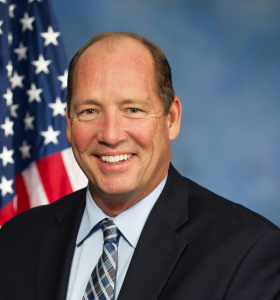
TED YOHO
Ted Yoho, a Florida Republican, served in Congress from 2013 to 2021, during which time he was chairman of the House Foreign Affairs Subcommittee on the Asia Pacific from 2017-2019. He serves as Co-Chair of the Consensus for Development Reform.
s Americans debate the rising cost of prescription drugs and the safety of global supply chains, one overlooked threat is quietly gaining ground: China is reshaping the rules of global drug regulation and using them as a tool of influence.
Beijing’s expanding footprint in low- and middle-income countries through its Belt and Road Initiative now includes not just roads, ports and power plants — it also includes the regulatory systems that govern food and medicine. In dozens of countries, China is training regulators, rewriting technical standards and providing equipment and infrastructure all aligned with its own state-centered model of governance.
This isn’t just about pharmaceuticals. It’s about geopolitical leverage, and the United States needs to act.
For decades, the U.S. has led efforts to build science-based regulatory capacity in developing countries. Agencies like the Food and Drug Administration, alongside the State Department and U.S. technical partners, have quietly worked to ensure that the world’s food and drug supply chains are governed by principles of transparency, scientific rigor and rule of law. These efforts have supported global trade, protected American consumers and helped countries grow their economies while upholding international norms.
But that leadership is now at risk. China’s model prioritizes speed over safety and political loyalty over independent oversight. The spread of these standards could fragment the global regulatory system in ways that directly harm U.S. national interests.
If China’s approach becomes the norm, the decades-long effort to build harmonized, science-based regulatory systems will erode. That means more variability in quality, less accountability and diminished U.S. credibility abroad. Once lost, leadership in setting international standards is hard to regain.
American companies, especially in the pharmaceutical and food sectors, face the world’s most stringent regulatory expectations. When partner countries adopt Chinese-style regulatory regimes, U.S. businesses face higher costs, uncertain compliance hurdles or outright exclusion from key markets. This hands China a trade advantage funded by U.S. inaction.
Countries that depend on China for regulatory support are also more likely to align with Beijing in multilateral forums and bilateral dealings. This compounds a broader shift in global power away from open-market democracies and toward state-driven authoritarian models.
The U.S. still imports most of its pharmaceutical ingredients, many of which pass through weakly regulated systems, making counterfeit drugs an immediate and growing problem. In a recent example, chemotherapy drugs flagged by surveillance efforts in Africa because of poor quality were traced to global distribution chains that included the United States.
This is not theoretical. It’s happening.
There is a straightforward solution to these imminent threats, though: strengthen U.S. investment in global regulatory capacity as a strategic priority.
This doesn’t mean new aid programs or open-ended spending. Washington can leverage existing tools — like the Development Finance Corporation, U.S. Trade and Development Agency and State Department assistance — to make targeted, time-bound investments in critical partner countries. These investments should focus on modernizing labs, training inspectors, building digital tracking systems, and improving governance and oversight.
This is not charity. It’s smart statecraft.
It protects U.S. consumers from dangerous imports. It ensures that American companies can compete on a level playing field. And it preserves U.S. leadership in a domain China is aggressively contesting.
Much like export controls and semiconductor policy, global drug regulation has become a front line in the broader competition between democratic capitalism and authoritarian statecraft. Washington needs to start treating it that way.
Right now, as the administration recalibrates U.S. foreign policy, is an opportunity to embrace global regulatory leadership as an America First priority. Support for strong regulatory institutions abroad translates directly into security, prosperity and trust at home.
America wrote the rules for safe, transparent drug development. We can’t let China rewrite them in secret.
More From CDR Participants
America Needs Both Trade and Aid to Win on the Global Stage
By Ted Yoho in Roll Call
CDR Testimony: Ted Yoho Testifies before the U.S. Senate Special Committee on Aging
By Ted Yoho in Roll Call
Rubio’s strategy is working: Reform global health without retreating from it
By Chris Stewart and Mark Green in the Washington Examiner
How to Put America First And Sustain U.S. Leadership in Global Health
16 Jan OpEd: How to Put America First and Sustain U.S. Leadership in Global Health By Ambassador Mark Green (ret) Former USAID Administrator, and Chris Stewart, former Membe
How Congress can help America on the world stage
Originally published by the Washington Examiner By Ted Yoho and Ed Royce | October 3, 2025 The government is shut down this week, but the rest of the world doesn’t pause or de-es