

11 Jun America Needs Both Trade and Aid to Win on the Global Stage
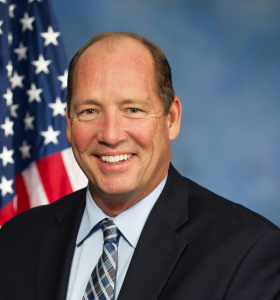
TED YOHO
Ted Yoho, a Florida Republican, served in Congress from 2013 to 2021, during which time he was chairman of the House Foreign Affairs Subcommittee on the Asia Pacific from 2017-2019. He serves as Co-Chair of the Consensus for Development Reform.
he Chinese Communist Party is aggressively expanding its footprint in the emerging markets and critical mineral corridors that will define the next century of global economic competition—building infrastructure, locking up supply chains, and cultivating strategic partnerships America cannot afford to cede.
The Trump Administration has rightly embraced trade as a central pillar of American strength. But trade doesn’t materialize from thin air. History has shown that the road to trade is often paved with aid as many of America’s strongest economic partnerships today were built on strategic investments in international assistance.
Look no further than South Korea.
Today, South Korea is universally known as one of America’s top export markets and a critical Indo-Pacific ally—but just decades ago, it was a very different story.
In the rubble of the Korean War, South Korea was one of the poorest countries on earth. Cities destroyed. Families starved. Virtually no industrial base. The Korean people, through extraordinary resilience and determined national leadership, set out to rebuild their nation. And the United States made a strategic investment in that future—providing food and medicine, helping build roads and factories, and supporting the institutions needed for long-term recovery and economic growth.
That small investment helped transform a nation that was once America’s largest aid recipient into our sixth largest trade partner—supporting a $240 billion relationship and hundreds of thousands of American jobs.
And South Korea is hardly an anomaly. Thirteen of America’s 15 largest export markets today were once aid recipients. In other words, more than a trillion dollars in annual American exports—and millions of American jobs today—are tied to comparatively miniscule investments made decades earlier to help countries become stable, safe, and reliable partners.
From Seoul to Singapore to São Paolo—many of our greatest trade relationships were made possible through strategic assistance that helped developing nations grow into thriving economic partners for America.
The goal of smart international assistance has never been dependency—it’s developing strong security and economic partners. As Mark Green, USAID Administrator in the first Trump Administration, said on his first day in office: “I believe the purpose of foreign assistance should be ending its need to exist.”
This is not charity, it’s strategy.
When 95 percent of the world’s consumers live outside our borders, aid and trade overseas is how American businesses find new customers, create jobs at home, and deepen strategic partnerships abroad.
For Florida, the stakes are especially high. International trade supports 2.8 million jobs across the state and drives more than $119 billion in annual exports of goods and services. The partnerships America builds abroad today will determine whether Florida businesses gain access to the world’s fastest-growing markets—or whether China gets there first.
And while many countries are ready to trade today, others still lack the reliable infrastructure, workforce capacity, financial stability, or governance structures necessary to attract private investment.
That’s not a reason to walk away. Strategic and targeted U.S. assistance does more than alleviate suffering—it builds the infrastructure, institutions, and stability that transforms countries from aid recipients into trade partners and strategic allies.
In many instances, the Administration is already pursuing this model.
In Africa, the U.S.-backed Lobito Corridor railway project is transporting critical minerals like copper and cobalt from the Democratic Republic of the Congo (DRC) and Zambia through Angola’s Port of Lobito to America and global markets.
An important part of the Administration’s success here lies beyond the rail. It’s the ecosystem of wrap-around projects along the corridor that help de-risk investments and stabilize communities—from the DFC providing clean water in Angola, to USTDA’s digital connectivity in Zambia, to the State Department’s $1 billion health commitment in the DRC. These strategic assistance efforts make private investment more attractive and accelerate long-term economic growth.
The U.S. is also pursuing a similar model in the Philippines—working alongside Japan to catalyze joint economic growth through the Luzon Economic Corridor. What began with a $250 million investment to combat tuberculosis and improve maternal health, expanded this month with Under Secretary of State Jacob Helberg flying to Manila, with American businesses and allied partners, to advance a 4,000-acre industrial hub for AI and supply chain security.
The Lobito and Luzon Corridors are proof that this Administration is already using investments in aid alongside trade to bolster American economic partnerships. As U.S. Ambassador Dan Negrea, who has served in both Trump Administrations, said earlier this month: “We are not talking about trade instead of aid.” That distinction matters. America’s winning playbook always includes strategic assistance. Abandoning it now is essentially unilateral disarmament in the face of a smart and motivated adversary.
China understands what America risks forgetting: that economic relationships are built over decades, through sustained engagement that begin long before a trade agreement is signed. The fastest-growing markets and largest consumer populations of the next century will overwhelmingly be in Asia and Africa, where Beijing is aggressively competing for influence and access.
America cannot afford to sideline one of its most effective tools in that competition.
Trade and aid are not competitors—together, they are how the U.S. builds strong partners, expands opportunity, outcompetes our rivals, and sustains its status as the world’s leading economic power. That is America’s winning formula.
—
By: Liz Schrayer, President and CEO of the U.S. Global Leadership Coalition (USGLC), and Congressman Ted Yoho (R-FL), Chair of USGLC’s Florida Advisory Committee
More From CDR Participants
America Needs Both Trade and Aid to Win on the Global Stage
By Ted Yoho in Roll Call
CDR Testimony: Ted Yoho Testifies before the U.S. Senate Special Committee on Aging
By Ted Yoho in Roll Call
Rubio’s strategy is working: Reform global health without retreating from it
By Chris Stewart and Mark Green in the Washington Examiner
How to Put America First And Sustain U.S. Leadership in Global Health
16 Jan OpEd: How to Put America First and Sustain U.S. Leadership in Global Health By Ambassador Mark Green (ret) Former USAID Administrator, and Chris Stewart, former Membe
How Congress can help America on the world stage
Originally published by the Washington Examiner By Ted Yoho and Ed Royce | October 3, 2025 The government is shut down this week, but the rest of the world doesn’t pause or de-es